


Completing a college degree takes more than academic preparation. Students also need access to food, housing, and other essentials that allow them to focus on learning and reach graduation.
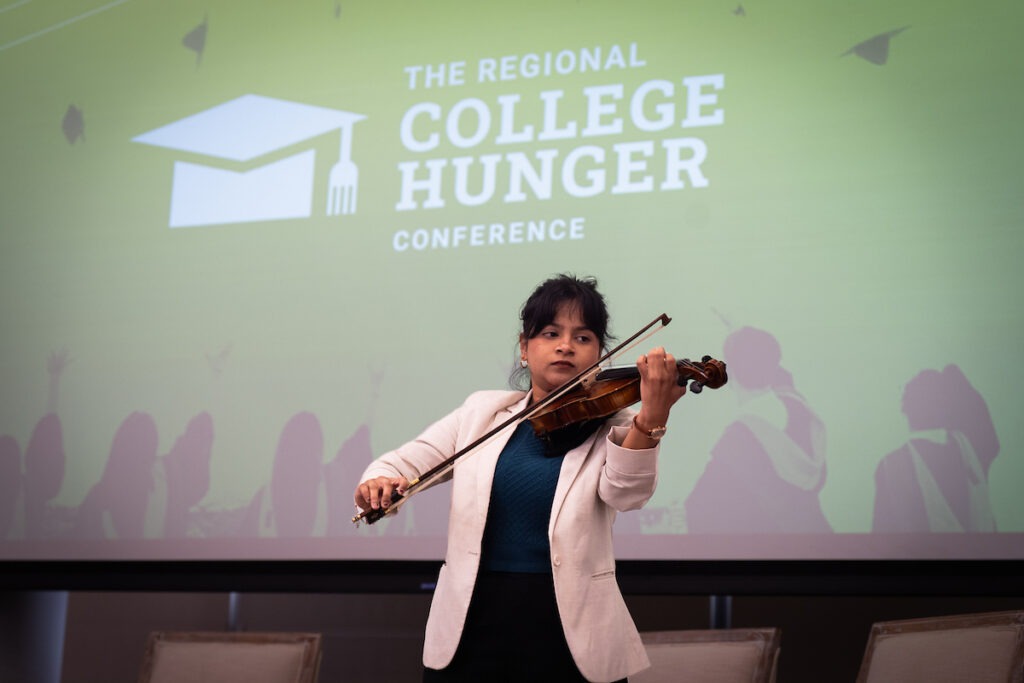
This year’s Regional College Hunger Conference brought together students and representatives from universities, nonprofits, and the business community to explore how we can make those resources more accessible across the Greater Washington region. Hosted in partnership with Consortium of Universities of the Washington Metropolitan Area and The George Washington University, it was the fifth consecutive year that the conference has been held.
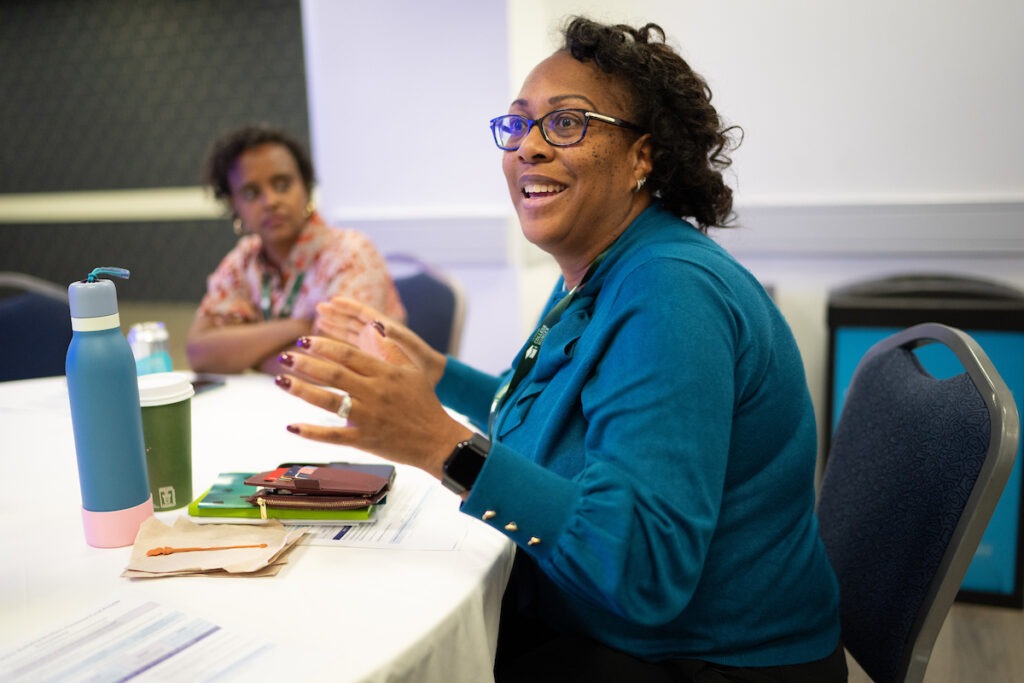
Throughout the conference, presenters described how college students are often balancing their education goals with jobs, parenting, and caring for family members. Some are returning to school later in life; some are the first in their families to attend college. Understanding those experiences is essential to building support that meets students’ needs.
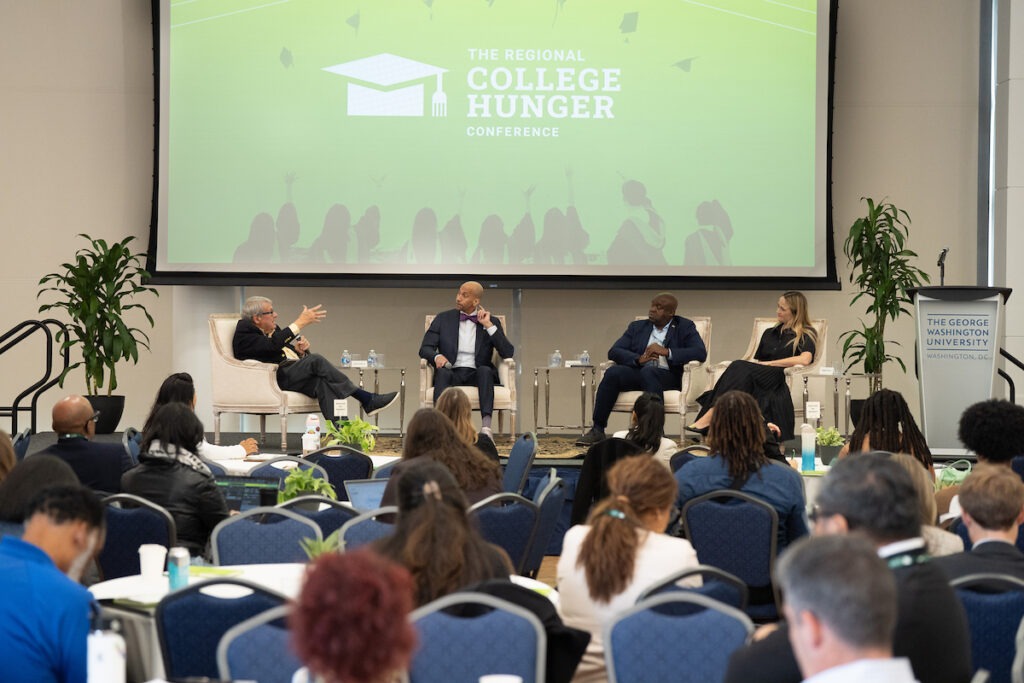
Attendees also learned about these challenges from students themselves. They described how hunger divides their attention between coursework and worries over whether they could afford their next meal. Resources like campus food pantries and the food bank’s grocery gift card program have offered meaningful support, offering students the space and strength to continue on the path to graduation.
Their experiences helped ground conversations about what’s working across campuses and how shared responsibility can make access to basic needs a consistent part of the college experience. By learning from students and building connections across sectors, we can help more students complete their education, pursue higher-paying jobs, and build financial stability while strengthening our region’s workforce.
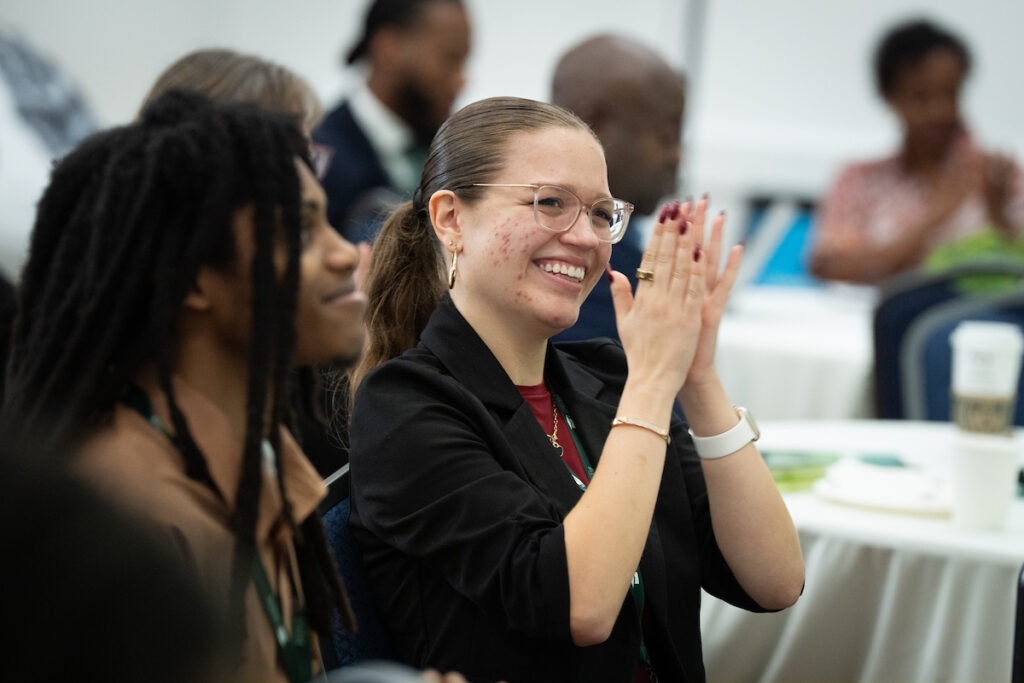
Photo credit: Sarah Voisin