

For Asad, his second, and final year at Prince George’s Community College came with plenty of uncertainty. Between searching for a job, keeping up with coursework, and figuring out his next steps, he was navigating a challenging time. With a limited budget, even something as essential as having enough food to get through the day wasn’t always guaranteed.
As a first-generation college student, Asad had connected with the college’s TRIO Student Support Services early in his education. When an email from the program introduced him to the Capital Area Food Bank’s grocery gift card pilot, he signed up for an opportunity that ultimately would make a significant difference in his final year of school.
“Once I got that card, and you know, realizing that I just had an opportunity to get food for myself, I started to feel a significant change in my life, mainly because I actually had the energy to do all of the things that I needed to do,” he shared.
Asad was studying public relations and journalism while balancing the financial demands of college life. He secured a work-study position, but his income needed to stretch to pay for school supplies, books not covered by scholarships, transportation, and other everyday expenses. Having dedicated grocery support meant one less essential expense to manage.
Through the Capital Area Food Bank’s college hunger grocery store gift card pilot program, students receive $150 in monthly grocery support. Prince George’s Community College is one of six participating higher-education institutions across the DMV, alongside Northern Virginia Community College, Montgomery College, George Mason University, the University of the District of Columbia, and Trinity Washington University.

For Asad, the flexibility of the gift cards meant he could shop not only for groceries that would last but also grab foods he enjoys. At his nearest grocery store, he filled his cart with rice, black beans, and snacks like Nutri-Grain bars to keep him going throughout long days on campus.
Beyond the groceries themselves, having a reliable way of accessing food gave Asad something he hadn’t always experienced during his time in college: peace of mind.
“Being able to make complete sure of the fact that I was able to eat really did give me a peace of mind that I didn’t have previously,” he says.
That reassurance became particularly important as graduation approached. After discovering he was missing class credit, Asad worried about whether he would be able to complete his degree on time. With a demanding final semester ahead, he credits the grocery support with helping him maintain the energy to stay on top of his academic responsibilities and reach the finish line.
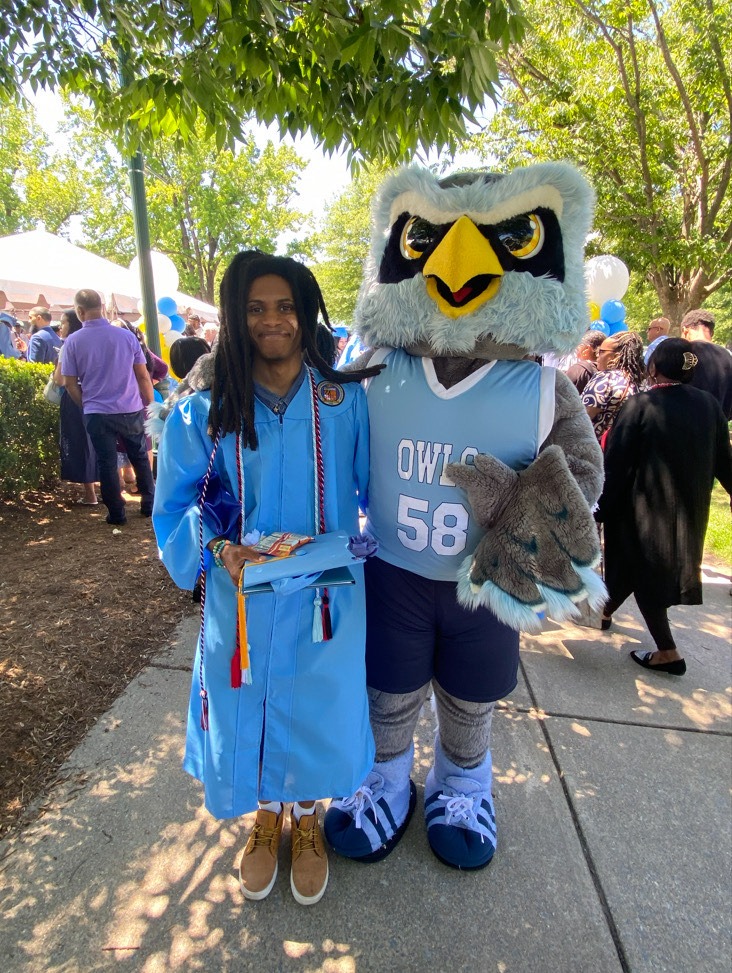
It also meant he had the energy to be active on campus beyond the classroom. Asad became involved in Reflections, PGCC’s literary magazine club, helping staff and performing at its Author and Art Showcase. He also volunteered with other student organizations, contributing to campus events and finding new ways to connect with his peers.
His experience accessing food assistance also inspired him to support other students. Through his work-study position, Asad worked at PGCC’s Owl Market, the campus food pantry where he had previously received groceries himself.
Having experienced the value of these resources firsthand, he found it especially meaningful to be on the other side, helping fellow students access the food they needed.
“It made me feel as if I was helping people a lot,” Asad said. “Being as accommodating as possible to them and feeling as if I’m assisting in someone else’s life was really fulfilling.”
Asad graduated from Prince George’s Community College in May, receiving an associate’s degree. He’s now considering continuing his education at the University of Maryland.
Looking back, he hopes his experience encourages other students to recognize when they may need additional support and seek out the resources available to them. He also hopes to see programs like the grocery gift card initiative expand, giving more students the opportunity to pursue their education without worrying about where their next meal will come from.