

On a bright morning along Maryland’s Eastern Shore, the Choptank River is calm as father-and-son watermen Mike and Cody head out on the water.
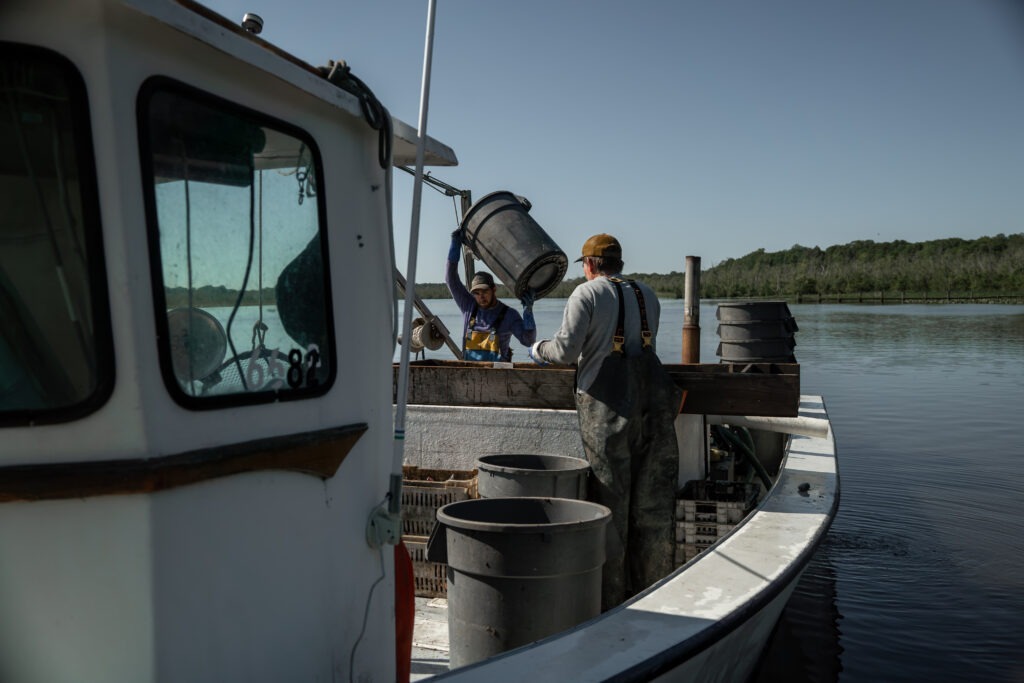
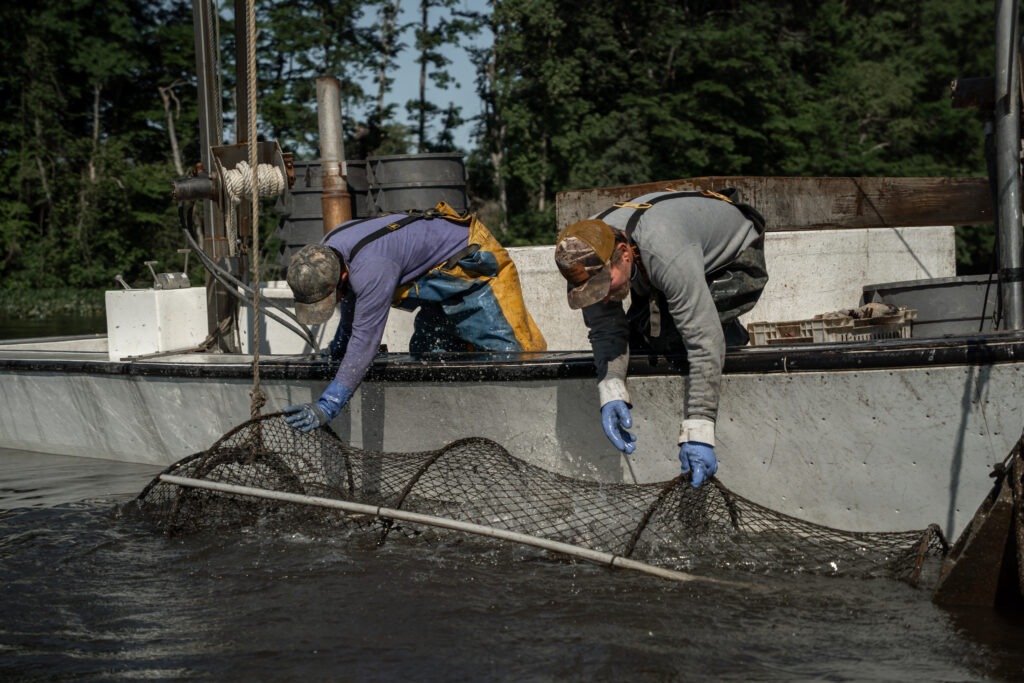
Their boat cuts through the river toward Tilghman Island and the Chesapeake Bay beyond. They’ve made this trip countless times before. For Mike, who has spent more than 30 years on the water, fishing isn’t just a job — it’s a way of life that’s passed down through generations. Working by hand, the pair haul large fishing pots from the water using mechanical rigs. As fish come aboard, they’re quickly sorted and stored in large buckets of water.
Today, they’re after blue catfish that will help fill the plates of food-insecure families in our community. Working with Tilghman Island Seafood, a local processor that partners with the Capital Area Food Bank, Mike and Cody are part of a network of watermen helping turn an invasive species into a nutritious source of food for families in Maryland.
Eight years ago, blue catfish weren’t a part of the landscape here. They intentionally introduced to Virginia’s Chesapeake Bay tributaries in the 1970s and 1980s for recreational fishing, but eventually migrated into Maryland’s tidal waters. With no natural predators, blue catfish disrupt the ecosystem, consuming massive amounts of native species like the state’s blue crabs. But what poses a challenge for the bay also presents an opportunity. Blue catfish are packed with protein and omega-3 fatty acids, making them a nutritious addition to meals.
That’s where a unique partnership comes in.
The Capital Area Food Bank works with Nick Hargrove, owner and president of Tilghman Island Seafood, to purchase blue catfish that are then distributed through the food bank’s network of community partners. The effort is supported through funding from the Maryland Department of Agriculture’s Maryland Food and Agricultural Resiliency Mechanism Grant Program.
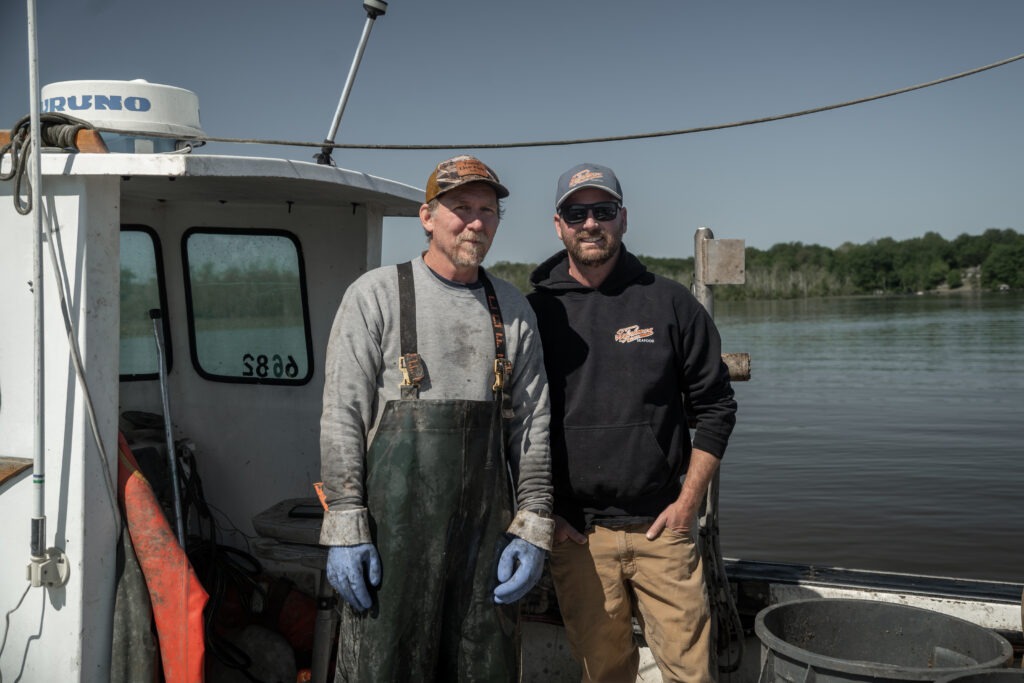
For Nick, the work is personal.
Growing up on the Eastern Shore, he discovered commercial fishing as a teenager. Although he spent a brief period away from the industry, he knew he wanted to return. Today, he operates a seafood processing facility on Tilghman Island and works closely with local watermen, including Mike and Cody.
When the Capital Area Food Bank places an order, Nick coordinates with the watermen he works with, letting them know how much fish is needed in the coming days and weeks. On a recent day when the food bank’s team visited, the boats brought in roughly 1,200 pounds of blue catfish.
“Working with the food bank is something that I’m most proud of doing,” Nick says, adding that
Every waterman involved knows where the fish is headed.
“They’re proud to be a part of it,” Nick says. “They know it’s going to people who need it.”
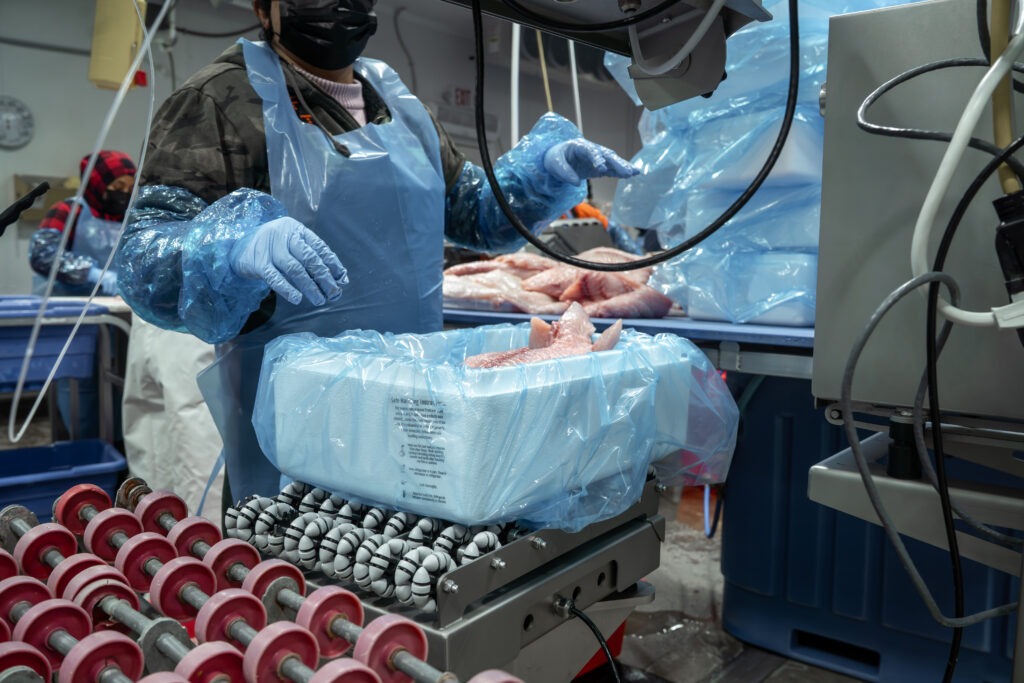
Once the fish come off the boats, they head to Tilghman Island Seafood’s processing facility. There, Nick’s team carefully prepares the catch, ensuring quality every step of the way. Some fish are cut into fillets, while others are processed into bite-sized nuggets. Everything is flash frozen to preserve freshness.
From there, the fish begins the next step in its journey, this time to the Capital Area Food Bank’s distribution center in Northeast DC.
It doesn’t stay there for long: As soon as the shipment arrives, it is allocated to community partners across the region. Through this partnership, we’ve already received and distributed 79,000 pounds of catfish.
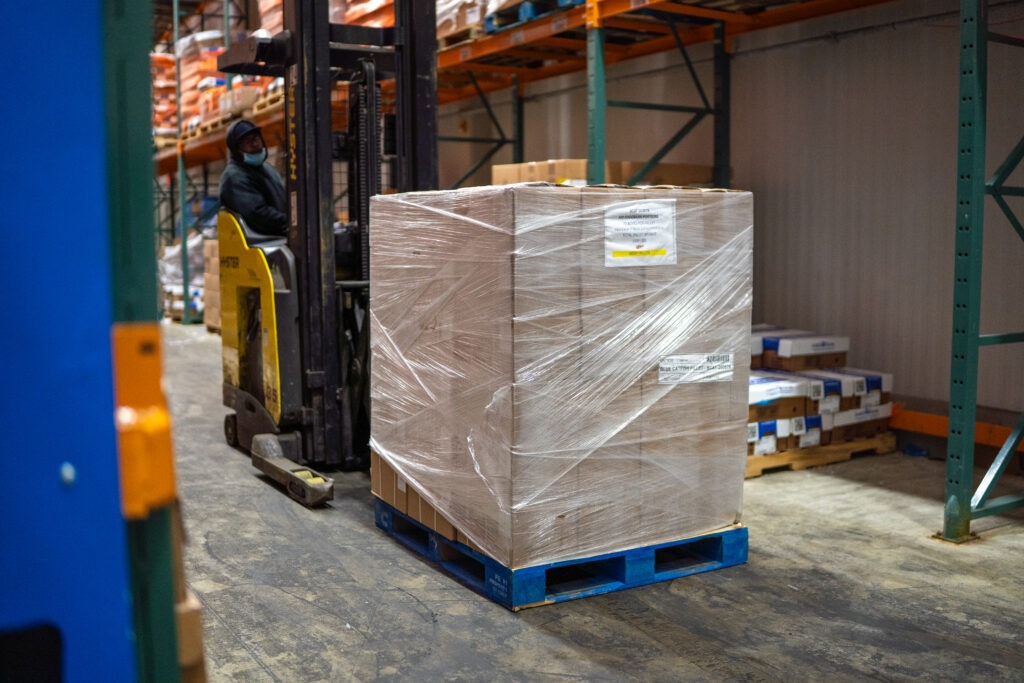
“It flies off the shelves,” says Eleni Shepard, Senior Director of Food Resources at the Capital Area Food Bank. “Our partner organizations love it because it’s a high-quality source of protein that they can offer, and clients really enjoy it.”
The program represents the best of what can happen when local partners come together around a shared goal.
An invasive species is removed from local waterways. Watermen gain reliable opportunities to support their livelihoods. And families across the region gain access to nutritious food.
What begins with a boat on the Choptank River ends on the tables of families in Maryland’s Prince George’s and Montgomery counties.
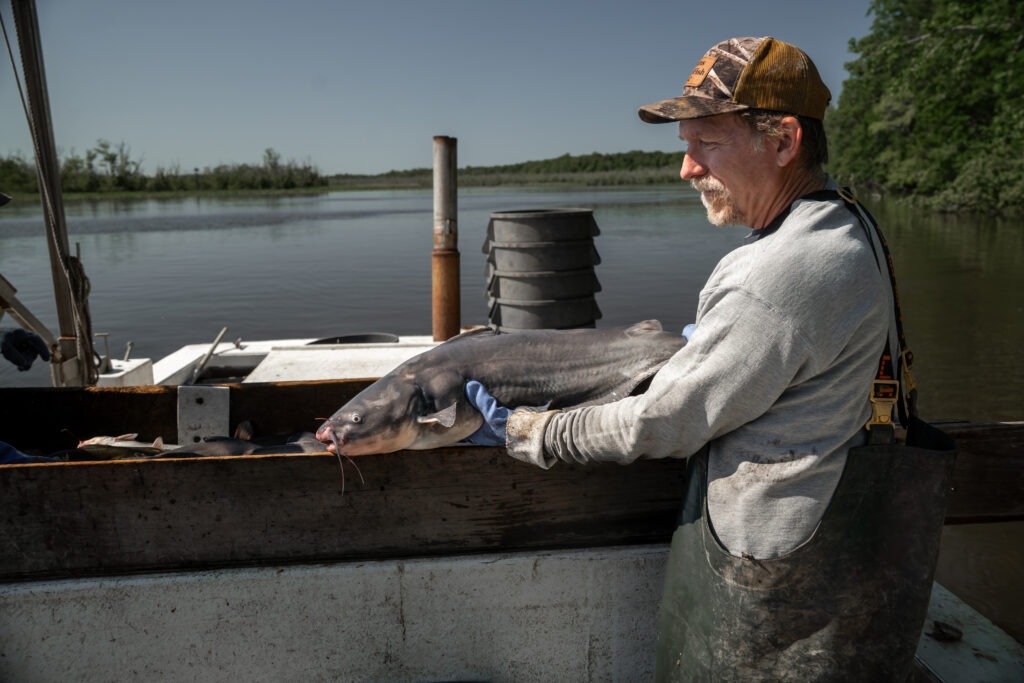
Photo credits: Natascha Tahabsen for Capital Area Food Bank