

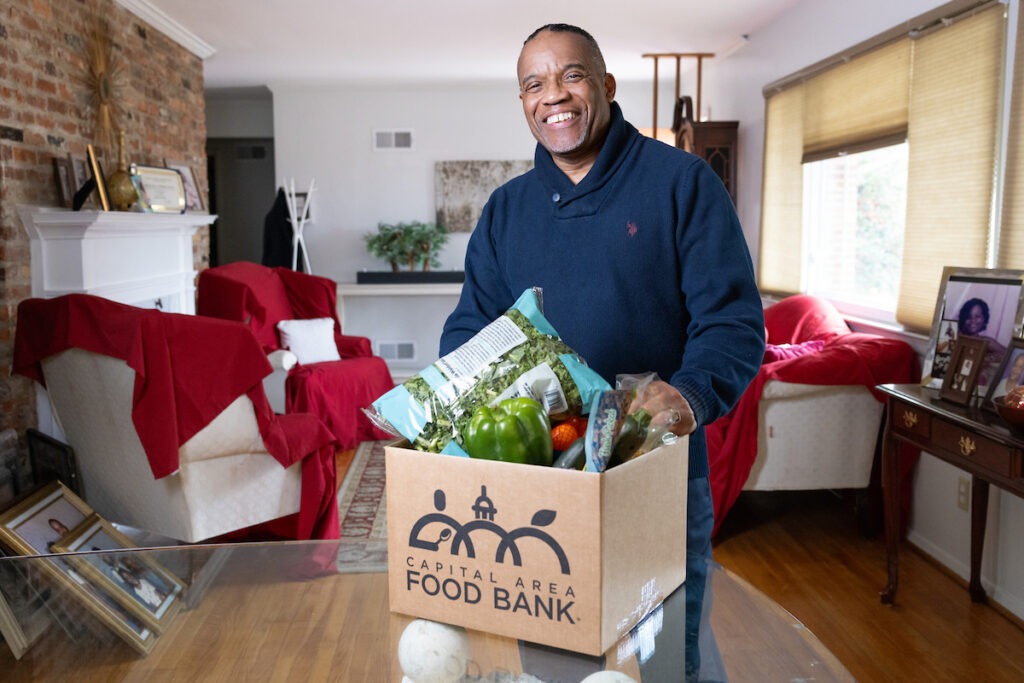
Nate Jenkins is proud of his family.
Spend even a few minutes with him and that becomes clear. His kids’ sports medals, trophies, and pictures blanket the mantel in his Oxon Hill, MD, home. The single dad talks about coaching his kids’ teams, investing in their education, and watching them grow into responsible adults building lives of their own. For Nate, being a dad is about responsibility and example.
“What it means to be a dad is that I’ve been entrusted with stewardship of a human being,” he says, “and that the outcome of the work that I do with them will be a result of how they operate within the world and contribute to society.”

Providing for his family has always been part of that stewardship. For decades, Nate has run his small business, a consulting firm that worked largely with federal agencies. He built it from the ground up, growing from a one-man operation to overseeing as many as 48 employees.
Then the contracts stopped.
In 2025, reductions in federal spending and workforce adjustments affected many agencies he worked with, and as a contractor, his business was among the first to feel the impact. Upcoming contracts were canceled, and others were not renewed.
“I got this pit in my stomach when I realized, ‘Wait a minute, not only they’re out of a job, I’m out of a job. Where’s my income going to come from? How am I going to feed my family?’” Nate recalls. “At that moment the light went off. We don’t know. We have no idea. The struggle began.”
After supporting his employees through the transition, Nate counted what remained to support his own household. Like many families in similar circumstances, he faced difficult tradeoffs.
He remembers wondering to himself then, “Do I go shopping for food and buy a week’s worth of groceries, trying to predict and plan and prepare meals for the month, or do I just buy on a day-to-day basis as money is available?”
During that period Nate turned to the local charitable food network. Through his local church, which partners with the Capital Area Food Bank, he received enough grocery staples to make it through the month.
“Food support has been tremendous for me and my family,” he says.
This support helps him on several levels. It allows him to meet his family’s basic needs while focusing on rebuilding his business and navigating an uncertain economic climate.
Nate’s experience reflects a broader trend identified in Hunger Report 2025, which found that 41% of households affected by federal workforce reductions experienced food insecurity. Economic shifts in our region increasingly affect middle-class families, and food insecurity is no longer limited to those traditionally considered low-income. which found that 41% of households affected by federal workforce reductions experienced food insecurity. Middle-class families are increasingly affected by economic shifts, and food insecurity is no longer limited to those traditionally considered low-income.
With support from the Capital Area Food Bank and other local food assistance organizations, Nate can focus on getting back on his feet rather than worrying about the next meal.
“In times like these we need to come together. Because, at some point, we’re all going to meet a similar situation with food insecurity,” he says. “And we would like to be able to reach out to other people and get that support, because we can’t do it alone.”
Learn more about how hunger affects neighbors across our region by visiting HungerIsHere.org.